
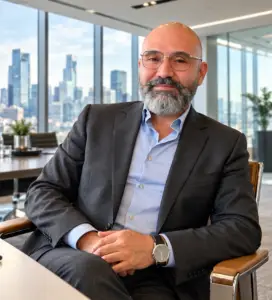
By Patrick Iturra | Asset Manager & Business Strategist Originally published August 7, 2023 · Updated October 2026
Direct Real Estate Ownership: Control Without Becoming the Operator
Direct real estate ownership gives investors something pooled structures generally do not: control over a specific asset.
The investor knows what is owned, where the property is located, how it is financed, what improvements are made, and when major decisions are considered.
That transparency can be valuable.
But direct ownership introduces another reality.
Someone still has to analyze the property, coordinate the transaction, manage execution, monitor the asset, and respond when conditions change.
For many established professionals and business owners, the challenge is not whether they understand real estate.
It is whether they want to become the operator.
Why Direct Real Estate Ownership Requires Structure
Real estate can be accessed through many structures.
A pooled investment vehicle allows investors to commit capital to a professionally managed structure that may own multiple assets. The investor receives economic exposure according to the terms of that structure, while investment and operating decisions are typically delegated to the manager.
Direct ownership works differently.
The investor, or a designated ownership entity, owns a specific property directly.
That can provide greater visibility into:
- the asset itself;
- the financing structure;
- the equity position;
- major capital decisions;
- the timing of improvements;
- and the eventual hold, refinance, or sale strategy.
Neither model is universally superior.
They solve different problems.
A pooled structure may appeal to an investor who wants broad exposure with limited direct involvement.
Direct ownership may appeal to an investor who values asset-level control and wants to build a portfolio around specific properties.
The important question is not which model is better.
It is which model fits the investor’s objectives.
Control Has an Operational Cost
The appeal of direct ownership is easy to understand.
The investor can see the asset.
The investor can evaluate the economics.
The investor can participate in major decisions.
But control creates responsibility.
A property must be acquired correctly.
Financing must be structured.
Due diligence must be coordinated.
Construction or improvements may need oversight.
Budgets must be monitored.
Market conditions must be evaluated.
Professionals must remain aligned.
The asset must eventually be held, refinanced, repositioned, or sold.
Each task can be manageable on its own.
Together, they can become a business.
For an entrepreneur already running companies, a physician managing a practice, an executive leading an organization, or a professional responsible for high-value decisions elsewhere, this introduces a second operating platform.
That is where direct ownership can begin consuming more attention than expected.
Ownership Does Not Require Full-Time Operation
Direct ownership does not mean the investor must personally coordinate every decision around the asset.
A structured operating model can separate two responsibilities:
Ownership and strategic control
from
execution and operational coordination
The investor retains the asset, the equity, and authority over major decisions.
Execution can be delegated within a defined scope.
That may include:
- investment analysis;
- transaction coordination;
- project execution;
- construction oversight;
- capital planning;
- asset monitoring;
- and coordination among specialized professionals.
The objective is not to remove the investor from the decision-making process.
It is to prevent the investor from becoming the operational center of every task required to maintain the investment.
Why This Matters as a Portfolio Grows
One property can often be managed informally.
Two or three assets require more coordination.
As the portfolio expands, the operating burden can increase faster than the number of properties.
Each asset creates additional decisions around financing, insurance, improvements, liquidity, market positioning, documentation, and long-term strategy.
Without a framework, the investor becomes the connection point between every contractor, lender, broker, property manager, accountant, and service provider.
That may work temporarily.
It does not scale efficiently.
A portfolio requires structure.
It requires clear reporting.
It requires disciplined execution.
And it requires a system that allows ownership to grow without requiring proportional increases in the owner’s personal involvement.
The EIG Model
This distinction between ownership and execution is central to the Estate Investments Group real estate investment model.
EIG does not operate as a pooled investment fund.
The client’s capital is not deposited into an EIG investment vehicle for EIG to own the underlying real estate.
Instead, the investor owns the asset directly or through the appropriate ownership entity.
EIG provides infrastructure around that ownership.
That infrastructure may include analysis, acquisition coordination, project execution, asset oversight, and strategic support within an agreed scope.
The investor retains ownership and control.
EIG coordinates execution around the asset.
The model is designed for investors who want direct ownership without building and managing every operational layer themselves.
Control Without Operational Overload
For many investors, control is not about handling every task personally.
It is about retaining authority over the decisions that matter.
Direct ownership can provide that control.
Delegated execution can make it practical.
This distinction is especially relevant for investors who already have demanding businesses, careers, or operating responsibilities.
They may not need another job.
They may need an operating framework.
The value lies in maintaining visibility and ownership while reducing unnecessary operational complexity.
That is a different objective from passive investment exposure.
It is also a different objective from becoming a full-time real estate operator.
From Capital to Portfolio
The long-term objective of direct real estate ownership is rarely a single transaction.
It is usually the development of a portfolio.
That requires more than finding another property.
It requires a repeatable structure for evaluating opportunities, allocating capital, coordinating execution, and maintaining oversight.
The sequence is simple:
Your Capital → Your Asset → Your Portfolio
The capital remains yours.
The asset remains yours.
The equity remains yours.
The question is how much of the operating burden must also remain yours.
For investors who value ownership but not operational overload, delegated execution creates another option.
You own. EIG executes.
For more information on direct ownership and delegated execution, explore the EIG real estate investment approach.
This article is provided for educational and strategic purposes. It does not constitute legal, tax, financial, brokerage, or personalized investment advice. Real estate investments involve risk, and individual decisions should be evaluated with appropriately qualified professionals.